
16 Sept ·
How to help a child make friends at a new school
Changing schools is one of the changes that weighs most on a child. Here is what you can do before, during and after the first day.
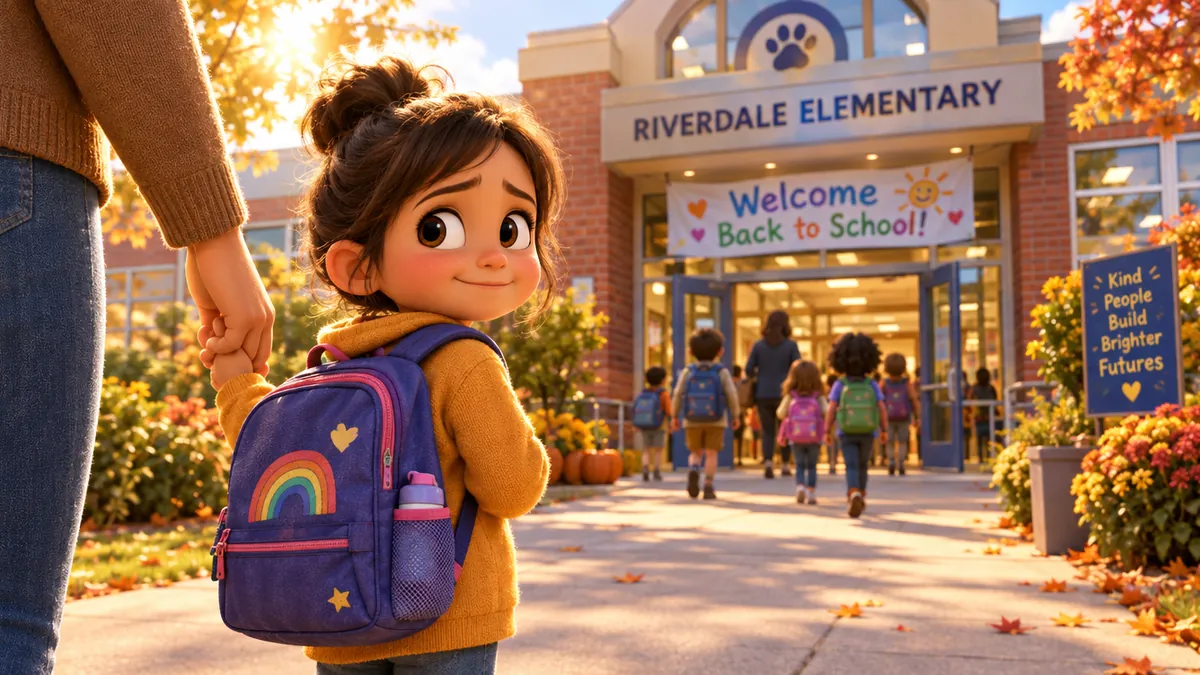
How can you help a child make friends at a new school? There are no magic formulas, but some attitudes help: preparing the change ahead of time, giving the child simple tools to introduce themselves, creating chances to socialize outside the classroom and keeping an open conversation at home. In this article we explain each of these steps and how a story can serve as a starting point.
Why making friends is harder at a new school
In a class where the groups are already formed, the new child arrives with no shared history: they don't know the games, the jokes, the names. Some children approach easily; others watch for days before daring to. Neither attitude is wrong. What helps is knowing that adjusting takes time, that it is normal to feel left out in the first weeks and that there are concrete things that can make it easier.
Before the first day
- Visit the school with the child if possible, and show them the classroom, the playground and the way to the toilets.
- Talk about what they expect and what worries them, without trying to solve everything right away.
- Rehearse a short introduction: their name, one thing they like and a question to ask another child.
- Talk to the teacher, so they know the child is new and can point out a classmate to accompany them in the first few days.
Simple tools for the child
Many children don't know how to start a conversation. Giving them ready-made phrases can be a huge help. For example: "Can I play with you?", "Do you like football?", "What's your favourite game?". Practising at home, as a game, makes these muments less scary. It also helps to explain that nobody is popular with everyone and that one or two friends are enough to make the playground stop being a hard place.
In the first few weeks
- 1Ask every day, without pressure, what went well. Start with the good things, however small.
- 2Invite a classmate over or arrange a snack at the park. Friendships solidify outside school, in settings where the child feels at ease.
- 3Look for extracurricular activities that match the child's interests: sports, music, drawing. Sharing an activity is one of the most natural ways to build bonds.
- 4Watch for signs: if the child avoids talking about school for several weeks, loses their appetite or often has physical complaints, it is worth talking to the teacher.
What to avoid saying
| Instead of... | Try... |
|---|---|
| "You'll see, you'll make friends right away" | "It might take a little while, and that's normal. I'm here." |
| "Don't worry about them, they don't know what they're missing" | "It sounds like it was a hard day. Do you want to tell me about it?" |
| "You need to be more outgoing" | "What game would you like to suggest tomorrow?" |
| Changing the subject when the child complains | Listening and repeating what you heard, so they feel understood |
How a story can help
Reading a story in which the child is the main character and has an adventure at a new school can help you talk about the subject without the pressure of a direct conversation. In the book, the character can feel the same fears, try to introduce themselves and find a first friend. If the child wants to, they can comment on what the character feels and what they would do in their place.
In a personalised book you can have up to 5 characters, so you can include the child, a sibling, a friend from the old school and even the teacher. You can write the story yourself, to include your child's specific worries, or let us create it from the theme. The preview is free, with no account needed, and each book includes 2 free revisions.
If the change involves moving to a new city
When the school change comes with a move, the emotional weight is greater. The child loses friends, places and routines. It helps to keep in touch with old friends by call or message, to talk openly about missing them and to create new rituals in the new home. A story about a move, with the child as the main character, can be a way of putting a name to what they feel.
When to ask for help
If, after several weeks, the child is still isolated, shows clear changes in sleep or appetite, refuses to go to school or shows persistent sadness, it is advisable to talk to the teacher, the paediatrician or a psychologist. A book can accompany, but it does not replace specialised support.
In short
Helping a child make friends at a new school is, above all, giving them time, security and simple tools. Prepare the change, practise introduction phrases, create chances to socialize and keep the conversation open. And, if you like, add a story in which your child is the main character: try the free preview and decide after you see the result.